The Role of AI in Shaping the Future of Public Relations
How AI is Transforming Public Relations - The Future of PR in the AI Era - PIx LinkedIn.com
The Role of AI in PR’s Future
Global researche(s) shows artificial intelligence (AI) is changing public relations (PR) a lot. It helps with daily tasks like researching and writing pitches, so people can focus on big ideas. But humans still need to check things to keep trust high.
It looks like AI makes messages very personal, matching them to what journalists like. This can work better, but too much AI might make things feel fake. AI seems key for handling crises fast, like spotting fake videos. It balances quick action with avoiding wrong info.
Evidence suggests AI helps make content show up in search summaries without clicks. This changes how PR measures success, from visits to just being seen. Studies point to ethics being important, like telling when AI is used. This builds trust, even as jobs change, but it opens new ways to be creative in branding.
How AI Improves PR Work
AI tools are now common in PR. They do things like watch media, write first drafts, and check feelings in posts. For example, tools like Brandwatch use AI to see brand talks right away, helping spot trends fast. This can make work quicker. Surveys say 59% of PR workers see AI as top need, using it to write pitches and find stories. But experts say always check facts to stop mistakes.
Making Messages Personal
AI’s big help is making pitches fit each person. It uses data to match a journalist’s past work and best times to send. This area might grow globally to $42 billion by 2028. Tools like Prowly help make small lists of contacts, not big emails. Personal touches raise chances of stories, but don’t be too pushy. Follow rules like privacy laws. By 2026, this will grow as AI helps brands show up in searches and suggestions.
Rules for Using AI with Journalists
Big news places like AP and Reuters have rules for AI content. They want sources listed, people to check, and say if AI helped. This keeps things real and builds ties. PR teams should keep lists of these rules and add notes in pitches. Being open is key. Many use AI, but humans must review to avoid fake quotes. Use checklists to mark if content is AI-helped. In 2026, talk more with editors for tips.
Content for Quick Views and AI Searches
More searches end without clicks—up to 69% in 2025. PR content needs to work in short summaries on screens or cards. AI likes clear titles, pictures, and main points first. Use sections and lists to help show up. Generative Engine Optimization (GEO) helps brands look good in AI answers like ChatGPT. Get good media spots to shape views.
Fighting Fake Videos and Fast Crises
Fake videos from AI can hurt trust fast. By 2026, plans must include ways to check and respond quick. Tools like Sensity AI help spot fakes. Answer in hours, as bots spread bad info fast. AI helps watch and feel moods, but people decide what to say.
Smart Stories and Brand AI Tools
Narrative smarts shape how AI sees brands with good media. Tools like Meltwater track this, focusing on deep content not lots. Brand chatbots use own data for steady writing, but check for right facts. This helps leaders share personal stories.
AI as Influencers and New Ideas
AI can make virtual spokespeople for same messages, like with Synthesia. But say it’s AI to keep trust. AI looks at trends to spend money smart, on things like content. For company talks, AI gives better audience views and auto reports. PR will need fast changes, with digital first and real feelings.
Job Changes and Human-AI Team
AI might cut starter jobs by doing simple tasks, so more focus on top roles. But AI doesn’t replace PR; it helps with ideas and feelings. In 2026, mix both for best, especially with tight money. An “AI reset” means more accept AI answers, but watch for hidden ways it works.
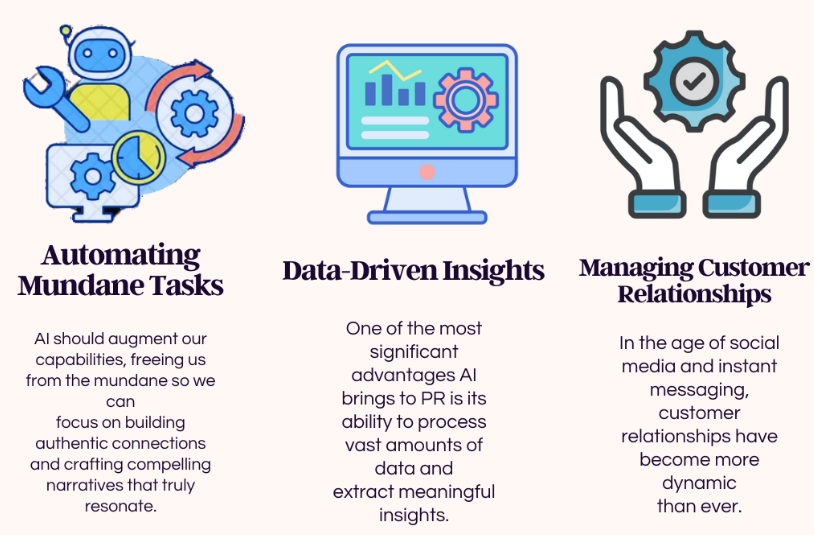
Here’s how AI is transforming key aspects of the PR industry - finpr.agency
Looking Ahead: The Imperative of AI-Supported PR
AI is becoming essential to the future of public relations, not just as a tool for speed, but as a driver of smarter, more strategic communication. By 2026, AI-supported PR will strengthen everything from personalized engagement to real-time crisis response, while reshaping how information is discovered, trust is built, and audiences are understood. The brands that succeed will be those that use AI as a collaborative partner—enhancing efficiency and insight while preserving ethics, authenticity, and human judgment. When balanced correctly, AI will help PR remain a powerful contributor to reputation, relevance, and long-term business success.
By Author, Admin, Niroshana De Silva. You can reach him at prminds@gmail.com