Why Sri Lanka Should Strengthen Regional Ties and Rethink Dollar Dependence
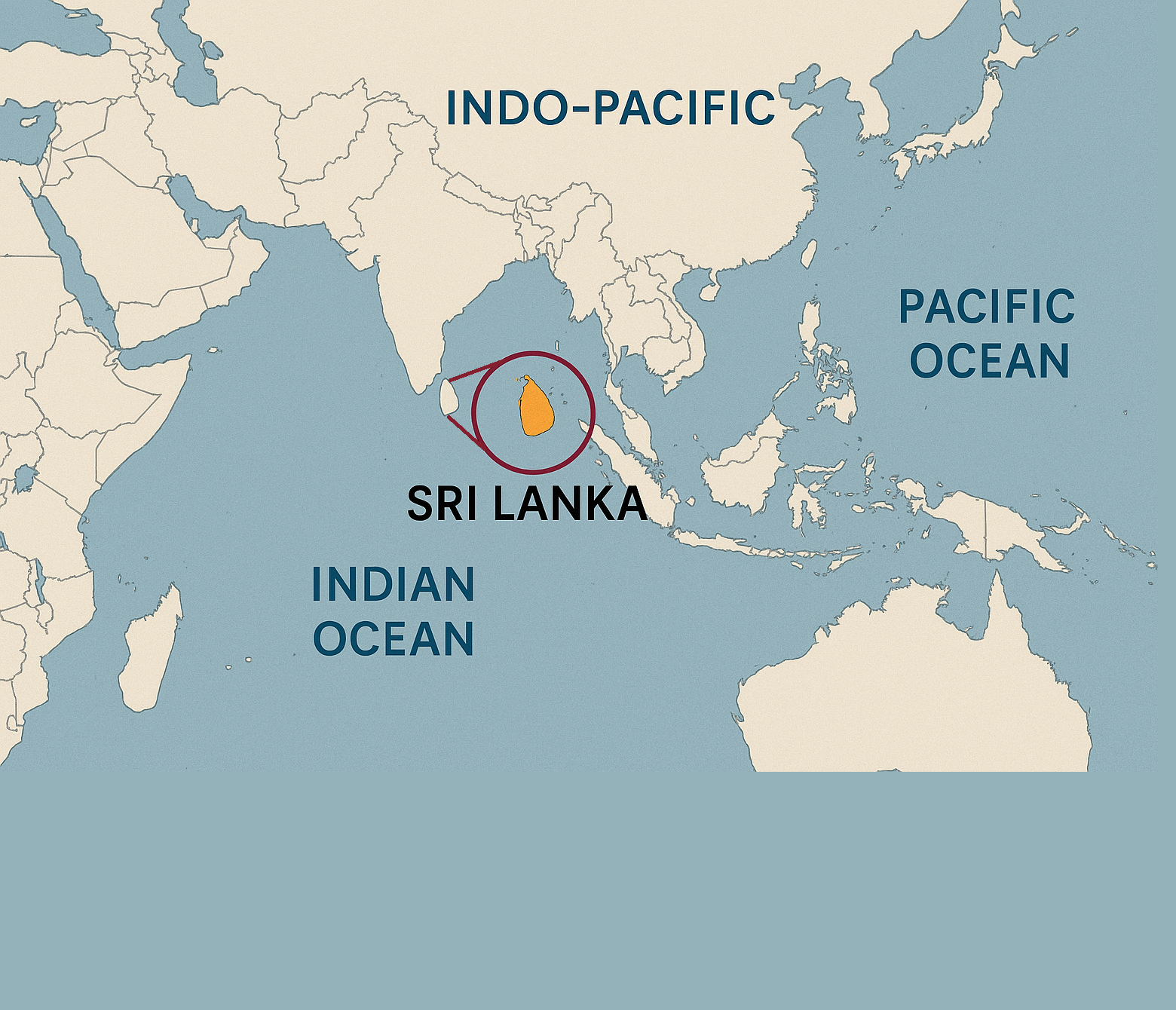
Sri Lanka sits at the heart of some of the busiest and most strategic maritime trade routes in the world.
Why Sri Lanka Should Strengthen Regional Ties and Rethink Dollar Dependence
Sri Lanka is a country with a proud history and a rich cultural heritage. Yet, in recent years, we have faced financial struggles that remind us of one important truth: we cannot ignore the strength of the nations around us. To build a stronger future, Sri Lanka must look carefully at its relationships with India, China, and other Asian countries, while also rethinking how we position ourselves in the global economy.
Why Regional Relationships Matter
India is not just our closest neighbor—it is also one of the world’s fastest-growing economies. From trade to technology, India’s growth brings opportunities for Sri Lanka. By strengthening our ties with India, we can access larger markets, attract investments, and improve regional connectivity.
China, too, has been a key partner in Sri Lanka’s infrastructure and development projects. Beyond China and India, Asia as a whole is becoming the center of global economic growth. Building stronger bonds within this region will give Sri Lanka a chance to benefit from shared trade, security, and cultural connections.
Ignoring these opportunities in the past has cost us dearly. Now is the time to reconnect with our neighborhood and find strength in regional cooperation.
Sri Lanka’s strategic need to bolster ties with India and China, leveraging India’s 7.8% GDP growth in 2024 and China’s Belt and Road investments, which have already contributed $1.5 billion to Sri Lanka’s infrastructure since 2010, as per World Bank data, to counter its economic isolation post-2022 crisis.
The Dollar Question – A Global Challenge
For decades, the United States dollar has dominated the global financial system. Countries trade, borrow, and save in dollars, but the reality is troubling: the U.S. prints more and more dollars, spreading them worldwide, while poorer nations struggle to buy these same notes.
As explained by financial thinkers like Robert Kiyosaki (author of Rich Dad Poor Dad), this system places smaller economies at risk. The dollar’s value is maintained not by real backing but by trust and global dependency. For countries like Sri Lanka, this is dangerous—it makes us vulnerable to global shocks and currency fluctuations we cannot control.
This is why small nations must consider ways to reduce overdependence on the U.S. dollar. We need to explore regional trade in local currencies, alternative financial systems, and new ways to stand on our own feet.
U.S. dollar’s dominance, noting that its unchecked printing—rising from $1 trillion in 2000 to $7 trillion by 2025 per Federal Reserve reports—exacerbates currency instability for nations like Sri Lanka, where the rupee hit 300 to the dollar in August 2025, urging a shift toward regional currency trade.
BRICS and the Rise of a New Currency
Today, the BRICS alliance—Brazil, Russia, India, China, and South Africa—has started discussing alternatives to the U.S. dollar. More countries are joining hands with BRICS, exploring the idea of a new shared currency for international trade. This could give nations more freedom and reduce the risks tied to dollar dominance.
For Sri Lanka, keeping close watch on these developments is crucial. While we may not join BRICS right away, aligning our policies to benefit from these changes could provide us with more financial security in the future.
BRICS exploring a new currency aligns with a 2023 study from the Journal of International Economics, suggesting a potential 15% trade boost for developing nations by reducing dollar reliance, offering Sri Lanka a pragmatic alternative amid global financial shifts.
Learning from Global Strategy – Lessons for Sri Lanka
In a recent discussion by McKinsey consultants on “strategy champions,” one key lesson stood out: successful countries and companies win when they have clarity of direction, discipline in execution, and adaptability in changing times.
For Sri Lanka, this means we must:
Set clear priorities – Focus on economic recovery, regional trade, and financial independence.
Execute with discipline – Avoid corruption, wastage, and short-term decision-making.
Adapt quickly – As global finance and politics shift, we must be ready to change course smartly.
A Path Forward
Sri Lanka cannot remain isolated or overly dependent on distant powers. Our best chance at stability lies in strengthening regional partnerships with India, China, and Asia, while carefully engaging with new global shifts like BRICS. At the same time, we must reduce our blind dependence on the U.S. dollar and work toward greater economic independence.
The world is changing fast. If Sri Lanka can combine the wisdom of strategy, the strength of regional ties, and the courage to rethink its place in global finance, we can move from crisis to opportunity—and secure a stronger, more independent future.
By Author, Admin, Niroshana De Silva. You can reach him at prminds@gmail.com