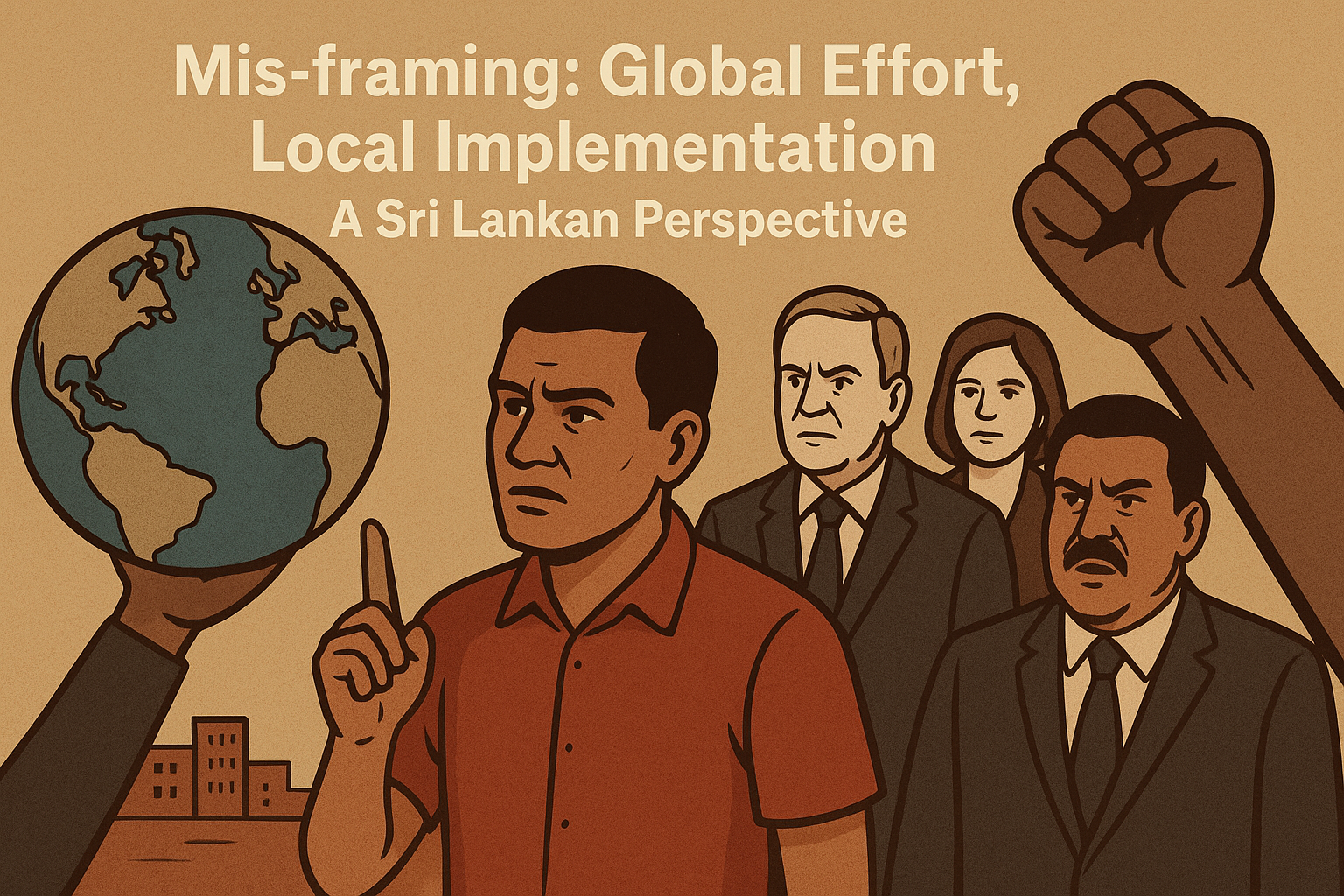
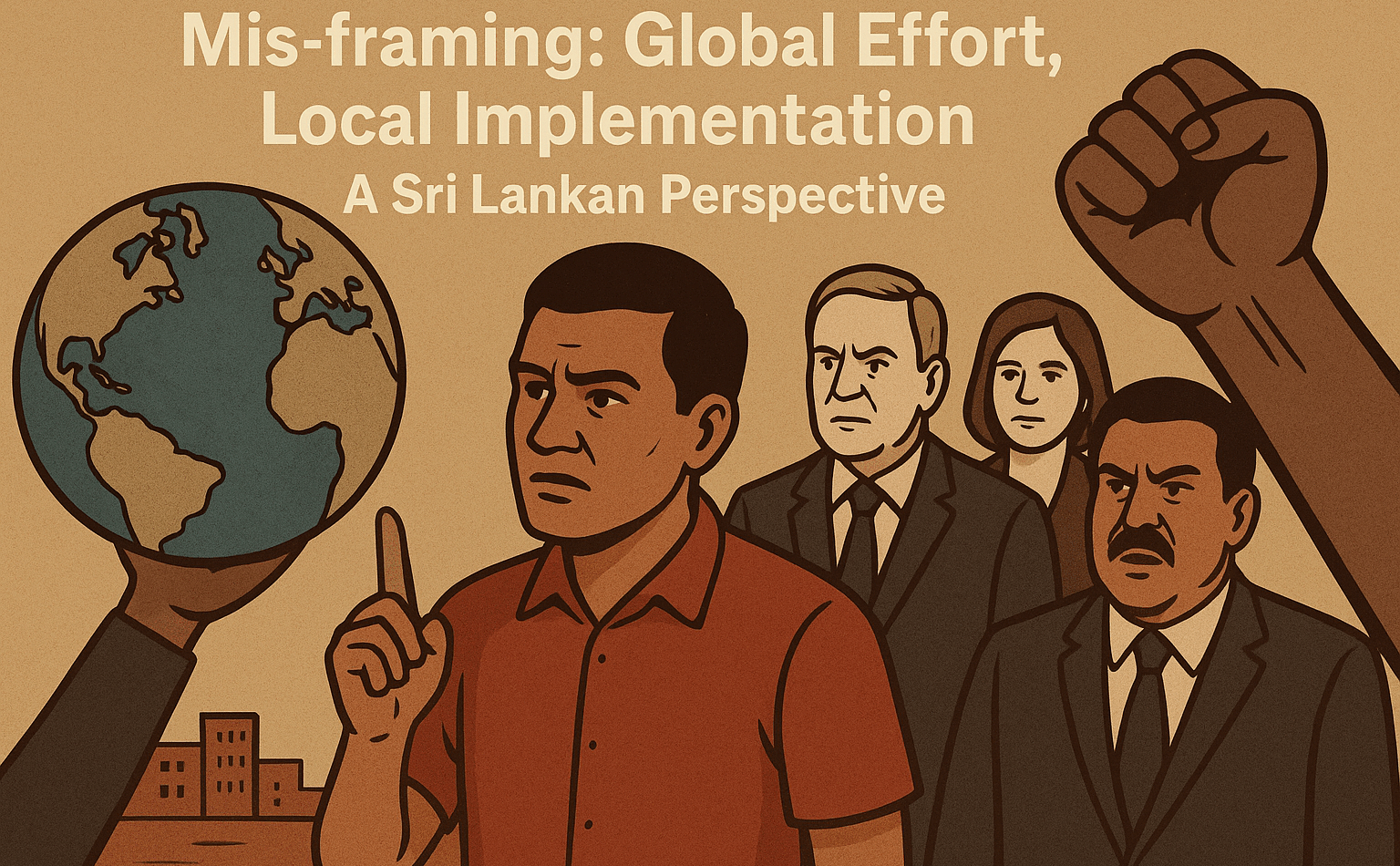
Mis-framing: Global Effort, Local Implementation – A Sri Lankan Perspective
Mis-framing: Global Effort, Local Implementation – A Sri Lankan Perspective
Mis-framing: Global Effort, Local Implementation – A Sri Lankan Perspective
Sri Lanka today is standing at a critical crossroad. The foreign policy of nonalignment, which once protected the island’s independence and helped balance global power rivalries, is under serious pressure. At the same time, the country is facing a dangerous trend of “mis-framing”—both at home and abroad—where narratives are twisted, the wrong enemies are targeted, and the real challenges remain unaddressed.
Mis-framing at Home: Turning Heroes into Villains
Those who sacrificed to end a brutal 30-year civil war and reunite Sri Lanka’s diverse communities are now being branded as “thieves” or “criminals.” Political groups like the NPP/JVP, with little governing experience but a long history of violent disruptions, have fueled this narrative.
Their “clean politics” message may sound appealing, but the reality is disappointing: after gaining power, they have failed to deliver meaningful reforms. Instead, their focus on witch-hunts and imprisoning war-time leaders risks destroying national morale and rewriting history. Such framing opens the door for extremist remnants and their international backers to re-emerge.
Global Mis-framing: Terrorists as Human Rights Defenders
On the international stage, the same distortion continues. Pro-LTTE diaspora networks, once the main financiers of terrorism, are now rebranding as human rights advocates. They actively lobby politicians in the powerful countries pushing a false narrative that Sri Lanka’s defense of its sovereignty was a crime.
If global powers continue to buy into this framing, it not only rewrites history but also undermines Sri Lanka’s right to protect itself against one of the world’s deadliest terrorist organizations.
Neutrality Under Threat: The Sachs Doctrine Lesson
Another trap lies in foreign policy. As the Sachs Doctrine highlights, small nations that lean too heavily on one superpower, especially the U.S. quickly lose their independence. For Sri Lanka, nonalignment is not outdated nostalgia, it is survival.
Over-dependence on one power risks provoking counter-pressure from rivals like China or India, leaving Sri Lanka stuck in the middle of great-power conflicts. Our strength lies in balance, not blind loyalty.
Governance by Deflection: The Container Scandal
Domestically, mis-framing is also used as a political weapon. A recent scandal involving 325 containers rumored to hold hazardous chemicals or even weapons was handled with zero transparency. Instead of a proper investigation, leaders quickly shifted blame to the opposition.
This is classic deflection politics. Instead of asking the right questions (“What systems failed?”), the focus was on the wrong ones (“Who can we blame?”). As global research warns, this erodes institutions and weakens governance.
Sri Lanka’s Hidden Strength: Internal Resilience
Despite leadership failures, Sri Lanka still survives because of its hidden strengths:
Communities that endured decades of terrorism but still chose reconciliation.
A civil society that, quietly and steadily, resists external manipulation.
A professional and disciplined military.
These are few of the real safeguards of the nation—often overlooked but vital in preserving unity.
The Way Forward: Reframing the Debate
If Sri Lanka is to navigate this critical moment, the national conversation must change:
From “Who should we punish?” → to “How do we fix institutions sustainably?”
From “Which foreign power will rescue us?” → to “How do we balance global pressures while staying sovereign?”
From “How do we erase the past?” → to “How do we build accountability for the future?”
Concluding Note:
Sri Lanka’s greatest risk is not only corruption or foreign interference—it is mis-framing itself. When leaders and international actors define the wrong enemies and ask the wrong questions, even the best policies fail.
The solution lies in:
Returning to true nonalignment.
Ensuring transparency in governance.
Respecting and protecting those who safeguarded peace.
If Sri Lanka fails to reframe its path, it risks being reduced from an active player in world politics to a mere pawn in the games of others.
By Author, Admin, Niroshana De Silva. You can reach him at prminds@gmail.com